IrBEA’s 25th National Bioenergy Conference expands to two dedicated events in 2026

In response to the continued growth and increasing technical depth of Ireland’s bioenergy sector, The Irish Bioenergy Association (IrBEA) is introducing a new two-event format for the National Bioenergy Conference in 2026.

Rather than a single broad event, the conference will now be delivered as two standalone, sector-focused conferences. The first conference taking place on Thursday May 7th will focus on solid biomass and biochar with the second conference taking place on Thursday October 8th will focus on biomethane and biofuel. Each event is dedicated to a key pillar of the bioenergy industry. This approach allows for more targeted technical content, clearer policy discussion and stronger engagement between industry, policymakers and project developers.


National Bioenergy Conference – Solid Biomass

A dedicated forcus for the biomass sector


IrBEA’s 25th National Bioenergy Conference – Solid Biomass is taking place on Thursday the 7th of May 2026, it will provide a focused platform for the solid biomass, biochar and wood fuels sector at a time of increasing policy, market and investment activity.

This event is designed specifically for stakeholders involved in:

  • Biomass supply chains
  • Biochar production and application
  • Heat and power generation from biomass and users
  • Equipment, technology and service providers to the sector
  • Policy, regulatory and sustainability areas

By concentrating exclusively on biomass-related technologies and markets, the conference will attract a highly targeted audience of decision-makers, project developers, end users and policymakers with interest in this sector.

IrBEA seeks sponsors for the National Bioenergy Conference – Solid Biomass

For sponsors, the dedicated biomass event offers:

  • Direct access to a focused and relevant audience
  • Opportunity to speak
  • Opportunity to exhibit
  • Greater visibility and impact than a combined, multi-technology event
  • Strong alignment with current policy discussions around renewable heat for all users, including the domestic market
  • Enhanced networking opportunities with customers, partners, stakeholders and   regulators.


National Bioenergy Conference – Biomethane and Biofuel

 A dedicated event for biomethane and the biofuel sector


IrBEA’s 25th National Bioenergy Conference – Biomethane & Biofuel, taking place on Thursday the 8th of October 2026, will provide a focused platform for Ireland’s biogas/biomethane and biofuel sectors at a time of accelerating policy development, project delivery, market growth and investment momentum.

This event is designed specifically for stakeholders involved in:

  • • Biogas/biomethane development using anaerobic digestion technology
  • • Farm scale biogas production opportunities and potential
    • Opportunities and challenges for indigenous liquid biofuel production and supply (road, marine and aviation)
    • Gas grid injection, transport and end use of biomethane and biofuels
    • Feedstocks, equipment, technology and service providers
    • Policy, regulation, sustainability and certification areas

By concentrating exclusively on the biomethane and biofuel sectors, the conference will attract a highly targeted audience of decision-makers, project developers, fuel producers, end users, stakeholders and policymakers with interest in this sectors.


IrBEA seeks sponsors for the National Bioenergy Conference – Biomethane and Biofuel

For sponsors, this dedicated biomethane and biofuel event offers:

  • Direct access to a focused and highly relevant audience
  • Opportunities to speak
  • Opportunities to exhibit
  • Greater visibility and impact than a combined, multi-technology event
  • Strong alignment with current policy priorities around renewable gas, sustainable transport fuels and energy security
  • Enhanced networking opportunities with customers, partners, investors, stakeholders  and regulators

As biomethane and biofuel plays an increasingly central role in Ireland’s decarbonisation of heat, transport and electricity this conference provides sponsors with a unique opportunity to position their organisation at the forefront of sector growth, innovation and delivery.

**********************************************************************

Contact Us

If you would like to discuss sponsorship with IrBEA, please contact Teresa O’Brien at teresaobrien@irbea.org or Sean Finan at seanfinan@irbea.org

IrBEA would also like to invite expressions of interest from potential conference exhibitors

There are exhibiting / trade stand opportunities at this conference for companies and organisations. Please get in touch with Teresa O’Brien teresaobrien@irbea.org to discuss the opportunities available.

IrBEA launch new Wood Fuel Factsheet for retailers and consumers

This factsheet provides an overview of wood fuel standards and regulations in Ireland for both retailers and consumers. It explains the Solid Fuel Regulations (2022) and outlines the legal requirements for selling and using firewood, pellets and briquettes on the island of Ireland. The document highlights the importance of choosing certified wood fuels to ensure compliance, efficiency and cleaner air. It also introduces the Wood Fuel Quality Assurance (WFQA) scheme as a trusted mark of quality and sustainability. By promoting certified wood fuels, this factsheet supports responsible heating, lower emissions and climate action.
Click the image above to see the full version of the factsheet


Press Release: Irish Bioenergy Association (IrBEA) urges Government to unlock Ireland’s Bioenergy potential in Budget 2026

Press Release – For immediate release
Date: 26th September 2025

Irish Bioenergy Association (IrBEA) urges Government to unlock Ireland’s Bioenergy potential in Budget 2026

The Irish Bioenergy Association has engaged with public representatives over the last few weeks on its priority items for budget 2026 and today publishes the details for requirements of the sector.

IrBEA is calling on the government to introduce a range of targeted measures in Budget 2026 to support the growth and development of the bioenergy sector.

IrBEA represents the biomass, biogas, biofuel, biochar, wood fuel and energy crops sectors, working to deliver a sustainable energy future. The Association believes that Budget 2026 presents a unique opportunity for Government to recognise the significant role of bioenergy in addressing Ireland’s climate, energy security, and rural economic challenges.

IrBEA CEO Sean Finan said: “Bioenergy is the largest source of renewable energy globally and has a vital role to play in Ireland’s energy transition. With the right measures in Budget 2026, Ireland can stimulate investment, create rural jobs, displace fossil fuels, and deliver meaningful carbon reductions. Other EU countries are far ahead—this Budget is the chance for Ireland to catch up.”


Key asks from IrBEA include:

  • Support Scheme for Renewable Heat (SSRH): Continued budget provision for the SSRH, to extend the SSRH to the ETS sector, remove the 1MW cap and add support for the replacement of older biomass boilers.
  • Carbon Tax: Maintain planned increases with revenues earmarked to support bioenergy and biomethane developments.
  • Biogas and Biomethane:
    • Urgent introduction of the long-awaited Renewable Heat Obligation and also other dedicated supports and measures to develop the sector
    • That the Department of Agriculture, Food and Marine would introduce a €2-3m pilot scheme to support the construction of up to 15 farm-scale biogas plants.

This scale of production can contribute to farm emission reductions and to farm income, while also raising awareness within rural communities of the positive benefits of biogas plants. This scale can act as an enabler of the biomethane sector and garner social acceptance.

  • Finance Act Provision: Fair treatment of biomass equipment in line with other mobile machinery in terms of road taxation and the use of marked gas oil.
  • Domestic Wood Fuels: €3m in capital grants to help wood fuel producers meet new Air Pollution Act (Solid fuel Regulations) moisture content requirements.
  • Eco-design Heating Appliances: Extending domestic grants to cover the replacement of fossil fuel appliances with biomass stoves and boilers.
  • Finance and Loans: Low-cost government-backed loans to assist bioenergy companies support forestry owners by affected by storm damage.
  • Training: Dedicated funding for renewable energy training programmes
  • Resourcing: Provide for additional staff in departments, state agencies and statutory bodies to implement renewable heating targets and enforce the Air Pollution Act (Solid fuel Regulations).

IrBEA Technical Executive Noel Gavigan added: “Our proposals are practical, cost-effective, and deliverable. Supporting indigenous bioenergy will reduce dependence on imported fossil fuels, strengthen energy security, and provide a fair pathway for farmers, foresters, and rural communities to participate in the renewable energy transition.”


IrBEA calls on Government to seize this opportunity and ensure that bioenergy is placed at the centre of Ireland’s energy, climate, and economic policies.

ENDS

For further information, contact:
Seán Finan, IrBEA CEO on 087-4146480

Noel Gavigan, IrBEA Technical Executive 087-6845977


Press Release: IrBEA calls for swift Government implementation of exempted development planning changes

For Immediate Release:

12/09/2025

IrBEA calls for swift Government implementation of exempted development planning changes

The Government public consultation on the review of exempted development has recently closed. The Irish Bioenergy Association (IrBEA) submitted proposals, on behalf of members, for both biogas/biomethane and biomass developments that should be included in the exempted development regulation changes being considered by the Government.

Seán Finan, CEO of the Irish Bioenergy Association (IrBEA) said: “IrBEA members are calling for swift Government implementation of the exempted development changes. The bioenergy sector and farmers, as key stakeholders, needs clarity and certainty on what will be included as exempted development in the updated regulations. The IrBEA submission focused on proposals in the rural exemptions, health & education exemptions and provided general feedback on contradicting items that must be addressed in the updated regulations.”

IrBEA calls for the following:

  • That any new exempted slurry storage infrastructure must also provide for facilities for the on-farm storage of digestate from anaerobic digestion processes.
  • The proposed 1000 cubic metres size for storage should be increased to 2500 cubic metres. This size would provide a buffer against unsuitable weather conditions for manure and digestate spreading and allows for optimised use during the growing season when plants are best placed to uptake and avail of the nutrients, thus maximising the positive impact on the environment and water quality from land spreading.
  • All storage tanks should be covered as this will reduce emissions to air, eliminate rainwater ingress thus improving the nutrient content of the stored material.
  • Farms with additional storage will be obvious partners for local biogas/biomethane plants. Tillage farms should not be excluded from this exemption as they need to import organic manures and often have no associated livestock buildings that would qualify under the exemption, as currently drafted.
  • Farm biogas facilities which meet the requirements of Department of Agriculture, Food and the Marine (DAFM) Animal by Products (ABP) Regulation Type 9 Plants should be exempted development.
  • Also, larger farm biogas plants that use materials/feedstock that are currently eligible to be land spread on farmland should also be exempted development.
  • The 200 square metre threshold, currently exempted and outlined in class 8 (exempted development rural), should be increased from the current 200 square metres to 1000 square metres for silage areas specifically. This increase would be important to facilitate the development of silage storage facilities on farms where the silage would be used as a feedstock for biomethane production and supply to a production facility.
  • A contradiction in the current exemptions must be addressed where, Class 8  currently exempts the installation of animal feed silos by farmers for storage of animal feed up to a height of 8 metres, subject to conditions. Whereas Class 18E3 (exempted development rural – renewable technologies on farms) states that the maximum height for an identical silo to be used as a store for wood pellets or wood chip, for fuelling a biomass heating system on the same farm, should not exceed 3 metres. Biomass storage on farms should also be allowable up to 8 metres.
  • Exemption should extend to all containerised biomass fuelled heating systems for the provision of heat at education facilities / schools.
  • Regarding the health exemptions, the reference to renewable energy technologies to support self-generation of power should be extended to include renewable energy technologies (including biomass / biogas) to support the production of renewable heat for use on the medical site.

Finan concluded: “Our proposals for exempted development, if implemented, would greatly assist the mobilisation of bioenergy including both the biogas/biomethane and biomass sectors. Many farmers have deferred proposed developments until clarity is brought to the exempted development regulations following the Government announcement that a review was going to take place. Swift Government action is crucial on this important matter so that developments can progress.”

ENDS.

For further information contact:

Seán Finan, IrBEA CEO on seanfinan@irbea.org

Biomass takes centre stage at the IrBEA industrial heat decarbonisation seminar in April

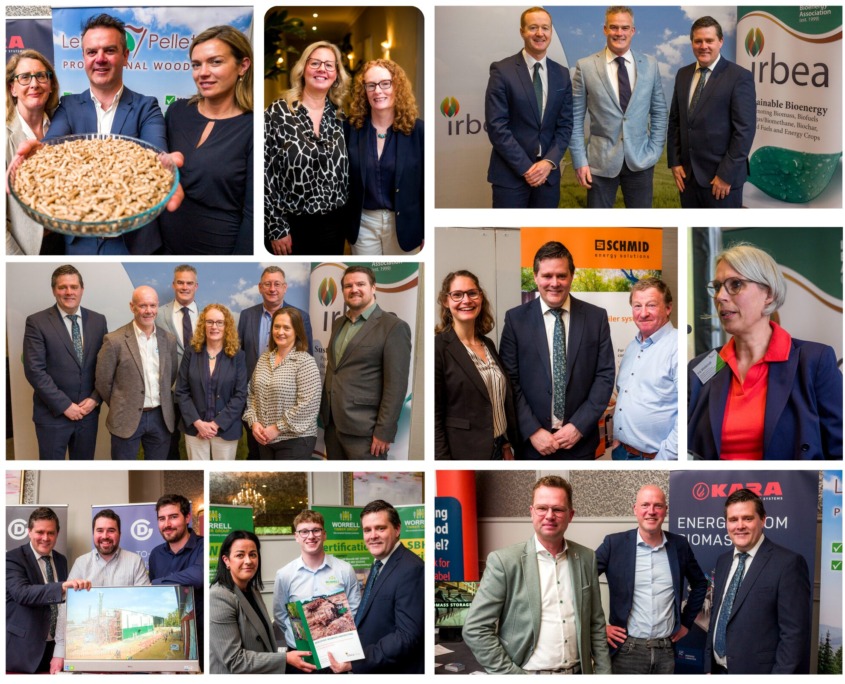
The Irish Bioenergy Association (IrBEA) hosted a successful seminar last month at the Killashee Hotel in Naas, Co. Kildare.

Irish Bioenergy Association (IrBEA) brought together industry leaders, policymakers, and key stakeholders at a successful seminar focused on the vital role of biomass in decarbonising industrial heat. The event underscored the growing momentum for bioenergy solutions across Ireland’s industrial and commercial sectors, especially in light of the Irish Government’s newly launched roadmap for industrial heat decarbonisation.

📢 Catch up on the highlights
👉 View the full update and access to live recordings from this IrBEA seminar here:
🔗 Presentations

🙏 IrBEA extends its sincere thanks to the Sustainable Energy Authority of Ireland (SEAI) Worrell Timber Group, Balcas Energy, South East Energy Agency (through the Interreg UNIFHY Project) and the Wood Fuel Quality Assurance (WFQA) scheme for their generous support and sponsorship which helped make this event possible. We would also like to say a big thank you to the speakers who shared their expertise on the day.


Advancing Industrial Decarbonisation through Biomass

The Irish Bioenergy Association (IrBEA) last week hosted a successful seminar at the Killashee Hotel, Naas, Co. Kildare, highlighting biomass as a key solution for decarbonising industrial heat. Topics included supply, sustainability, certification, and the latest innovations in biomass technology.
With the Government’s new roadmap for industrial heat decarbonisation, interest in biomass is growing fast. As one of the most cost-effective renewable options, solid biomass is helping businesses lower emissions and energy costs.

IrBEA thanks the Sustainable Energy Authority of Ireland (SEAI), Worrell Timber Group, Balcas Energy, South East Energy Agency (Interreg UNIFHY Project) and the Wood Fuel Quality Assurance scheme—for sponsoring this event.

A big thanks to all our exhibitors and attendees for making the day a great success. We look forward to continuing our work to encourage decarbonising industrial heat through biomass. Finally a special thank you to all our speakers who shared their expertise we are extremely grateful.


The Solid Biomass Capacity Statement 2024

This Solid Biomass Capacity Statement authored by a multi-disciplinary team within IrBEA aims to give market confidence and certainty to energy users regarding the availability and capacity of the solid biomass sector to deliver renewable decarbonised heating solution in Ireland as they transition from fossil fuels to renewable fuels.

Bioenergy is the largest source of renewable energy globally

To constrain global surface temperature rise to 1.5 degrees Celsius in line with the Paris Agreement, the Intergovernmental Panel on Climate change (IPCC), and more recently the International Energy Agency (IEA), have stated the need to greatly reduce fossil fuel carbon emissions in the move to carbon neutrality by mid-century. Among the measures identified is a ramping-up of modern bioenergy deployment, and bioenergy with carbon capture and storage (BECCS).

IrBEA through its Wood Fuel Quality Assurance (WFQA) scheme has worked to develop a nationwide network of certified solid biomass suppliers over the last decade. This network of suppliers of all types of wood fuels including firewood, wood chip, wood pellets and wood briquettes  are well equipped to satisfy the biomass resource needs of heat users.

Full report is available here.

Specified Biomass Harvesting – Good Practice Guidance for Energy Assortment Harvesting at Clearfell

The Irish Bioenergy Association (IrBEA) has identified the valuable, renewable biomass fuel resource provided by Specified Biomass Harvesting (SBH), which is an abundant source of renewable fuel for use in larger scale heat and power generation. This report provides a guide for foresters and stakeholders on how to harvest SBH without adversely affecting the forest or local ecosystems and environment.

Ireland’s forestry resource has the potential to provide large volumes of by-product material for energy use through harvesting specified biomass during normal thinning and harvesting operations. This by-product material, which is in addition to the harvesting of timber and pulp products, is usually described as the side branches and tops of trees – material also known as brash, which will otherwise be left in the forest site. By harvesting this material through specified means, it is possible to generate large volumes of useful biomass for energy while enhancing sustainable forest management practices. It is critically important that this harvesting is carried out in a manner that protects the future productivity of the forest, the local ecosystems, and water courses. This guide, which was developed by the Irish Bioenergy Association with contributions from its members and associated organizations and stakeholders, will greatly assist foresters and other stakeholders in determining what material can be harvested while ensuring optimal forest production and protection of the local environment.

Read the full report here.

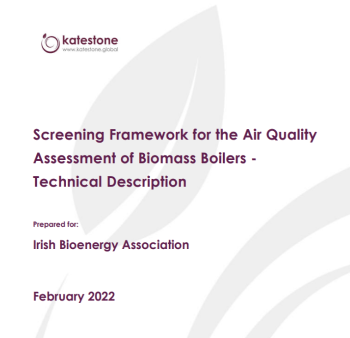
IrBEA confirms approval by EPA of the Katestone Global Report  – Screening Framework for the Air Quality Assessment of Biomass Boilers

The Irish Bioenergy Association (IrBEA) commissioned Katestone Global to complete the “Screening Framework for the Air Quality Assessment of Biomass Boilers” report in response to the requirement for an EPA IPCC licence review for biomass heating system installations above 250kW at intensive agriculture EPA licensed facilities.

IrBEA promotes best practice across all aspects of the industry from biomass systems design and installation, quality fuel supply and environmental considerations. This three-part report (Technical description, Single boiler framework, Multiple boiler framework) is an example of the organisation working to address barriers to the deployment of renewable heat in Ireland.

This report provides a clear pathway for the installation of biomass heating systems, up to 1MW in size, on intensive agriculture licensed sites, without negatively impacting on local air quality. This is verified through the completion of the screening framework tool or a specific individual air modelling assessment depending on the individual site constraints. The framework also serves as a guide to other proposed installations where licencing is not required. Modern biomass boilers can be installed to dramatically reduce emissions of CO2 and can do so without having any negative impacts on air quality.

During the course of completing this work, Katestone and IrBEA have consulted widely with industry and stakeholders in the development of this three-part report. This has resulted in Katestone Global developing a scientifically based solution to help resolve the issues identified without adversely impacting on air quality.

We would like to acknowledge the EPA engagement during this work and for their feedback and technical input to the various drafts presented during the review and approval process. We would like to pay tribute to Micheal Fogarty and his team at Katestone Global for their commitment and dedication when compiling this report.

IrBEA would like to express our sincere gratitude to the Sustainable Energy Authority of Ireland (SEAI), the Irish Farmers Association (IFA), the Wood Fuel Quality Assurance (WFQA) Scheme, Woodco, CHP Mechanical and Towards Zero Carbon for their sponsorship contributions. For further information please contact seanfinan@irbea.org

REPORTS

Screening Framework for the Air Quality Assessment of Biomass Boilers – Technical Description

Screening Framework for Air Quality Assessment of a Single Biomass Boiler within a Site Boundary

Screening Framework for Air Quality Assessment of Multiple Biomass Boilers within a Site Boundary


IrBEA’s Proposals for ‘Programme for Government’ 20/05/2020

The Irish Bioenergy Association (IrBEA) in recent weeks has circulated its Programme for Government proposals to political representatives across all political parties and independent groups. The organisation continues to lobby for the Programme for Government to incorporate bioenergy measures and supports to assist economic recovery, emissions reduction targets and climate action. To read the full press release please click here